Kaziranga National Park sits on the floodplain of the Brahmaputra River in Assam, and its landscape is dominated by vast stretches of elephant grass, marshes and scattered forest. It is one of the most important strongholds of the Indian rhinoceros, and it also has a high density of Bengal tigers—though seeing one in that tall grass is never easy.
On the grassland plains
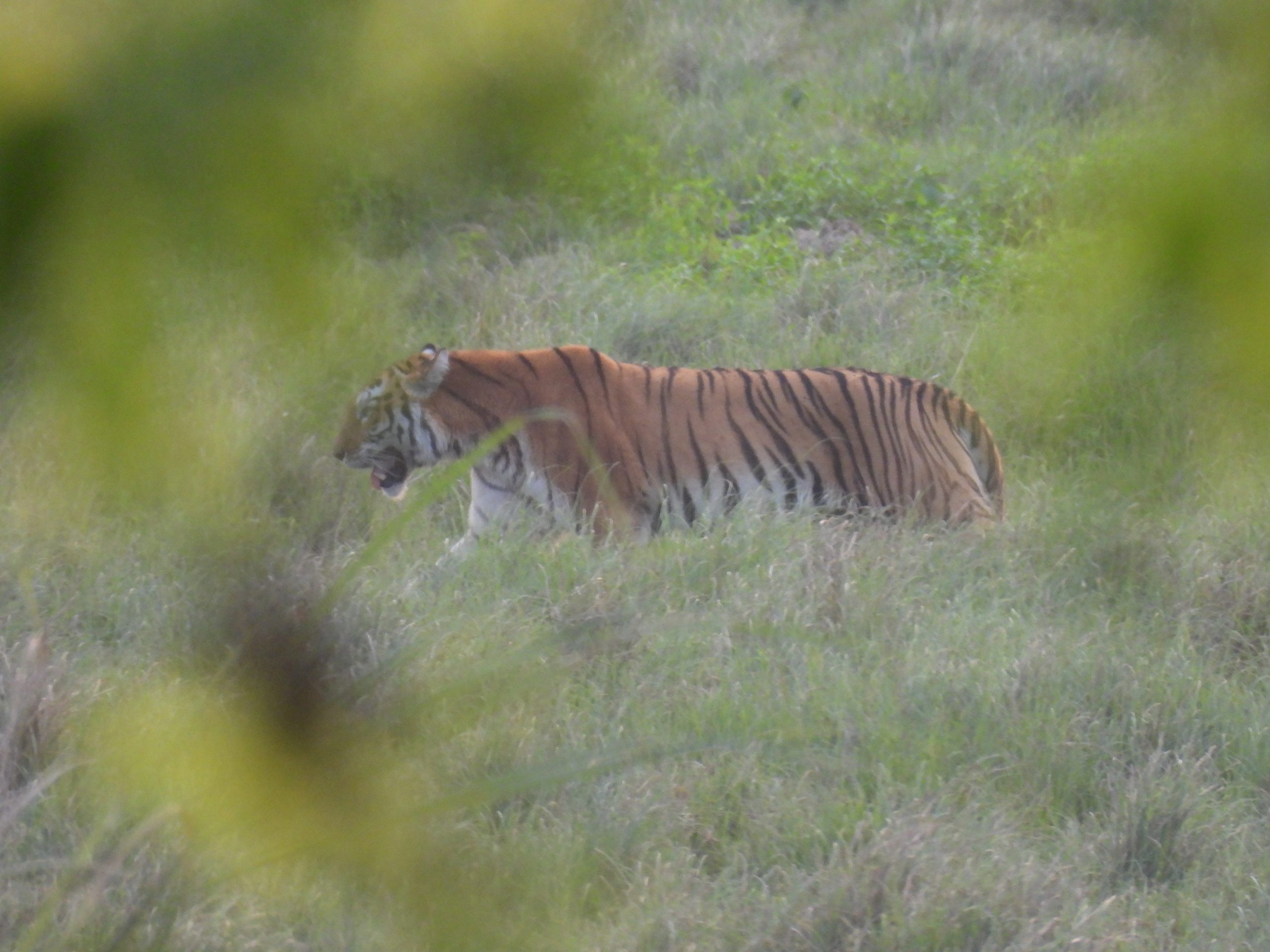
Driving across the plains in an open jeep, I photographed Indian rhinos grazing in the open, their armoured-looking skin glowing in the early light. Wild water buffalo, heavier and more imposing than I expected, gathered near the wetlands, and herds of deer moved through the grass. Elephants, both wild and the park’s own, were part of the landscape everywhere we went.
A tiger in the tall grass
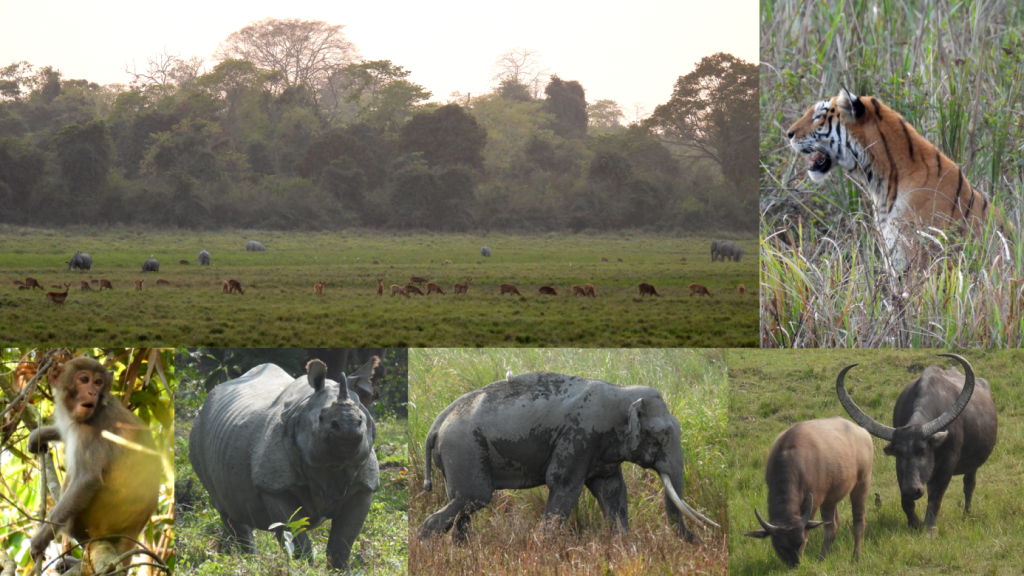
Tigers in Kaziranga are masters of concealment. The grass can be taller than a person, and a tiger can be a few metres from the track without being seen. Our chance came when the alarm calls of deer told us something was moving. We waited, scanning the edge of the grass, until a Bengal tiger stepped out—only for a few moments—before melting back into cover.
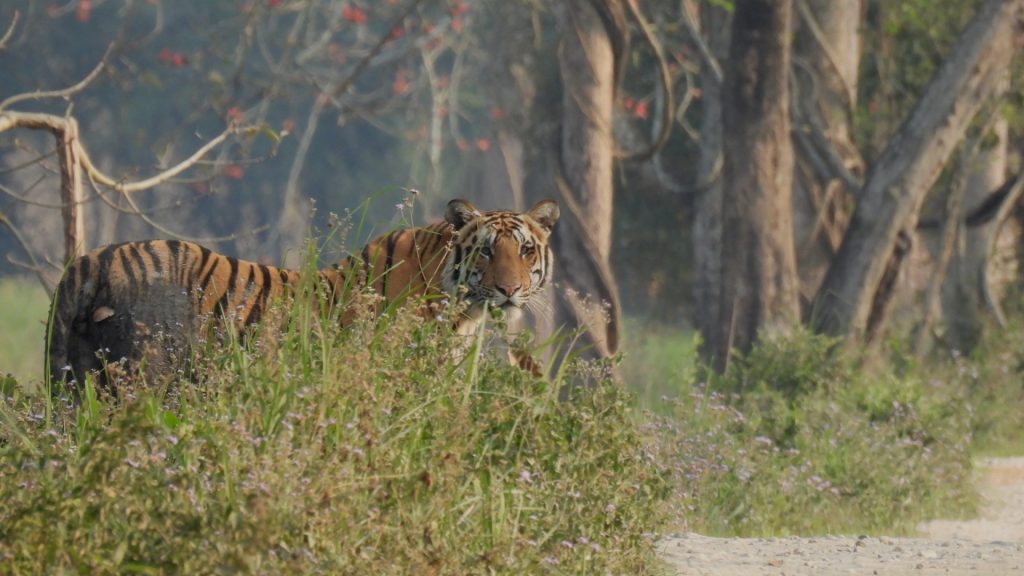
A few seconds with a tiger in the wild is worth every hour spent waiting for it.
That is why the India expedition includes ten jeep safaris across different zones of the park. Each zone has its own character, and spreading our time across them gives us the best chance of meeting Kaziranga’s most elusive resident. Even so, as with all wildlife, a tiger sighting can never be guaranteed.